
Surgical Dialysis Access
Surgical Access Procedures
For patients who require dialysis, having reliable access to the bloodstream is essential for effective treatment. Surgical dialysis access provides established, long-term options for hemodialysis and peritoneal dialysis, depending on each patient’s needs.
At Pedes Venous Institute, we help guide patients through the process of selecting and maintaining the most appropriate access type, working closely with specialists and care teams to support safe and effective treatment.
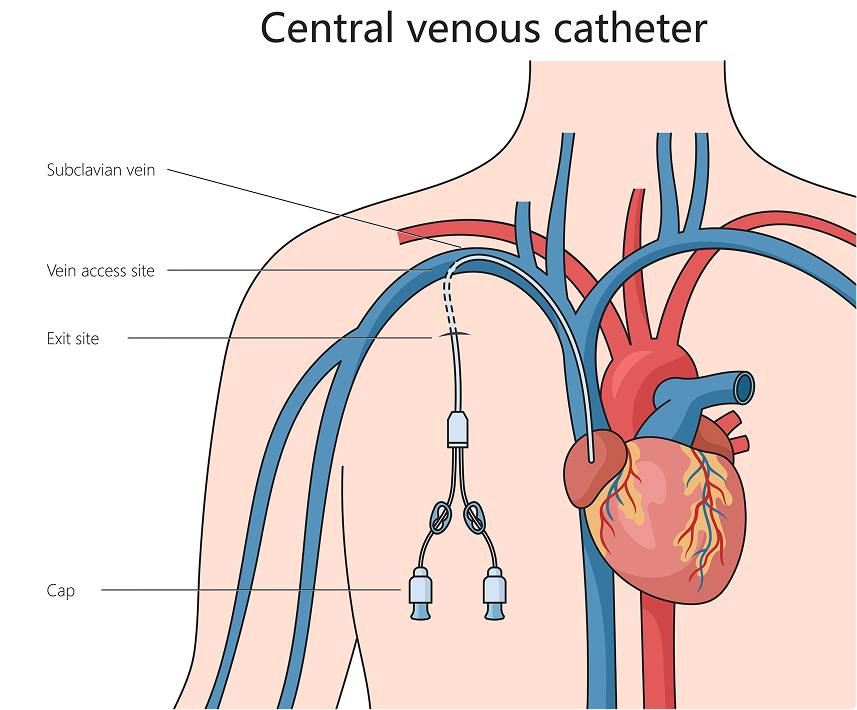
Temporary Access for Hemodialysis
These catheters provide direct access to the bloodstream and are often placed while a more permanent solution, such as a fistula or graft, is being prepared or restored.
During the procedure:
These catheters provide direct access to the bloodstream and are often placed while a more permanent solution, such as a fistula or graft, is being prepared or restored.
During the procedure:

A local anesthetic is used to numb the area
A small access point is created in the skin
The catheter is guided into a large vein using imaging
PD Catheter Placement/Removal
Surgical PD Catheter Placement
Surgical placement is typically a minor procedure and may involve:
General anesthesia
A short procedure time (often under one hour)
Same-day discharge for many patients
Percutaneous PD Catheter Placement
This technique typically involves:
Local anesthesia with light sedation
Small access points rather than large incisions
Same-day discharge
Surgical Fistula & Graft Creation (AVF/AVG)
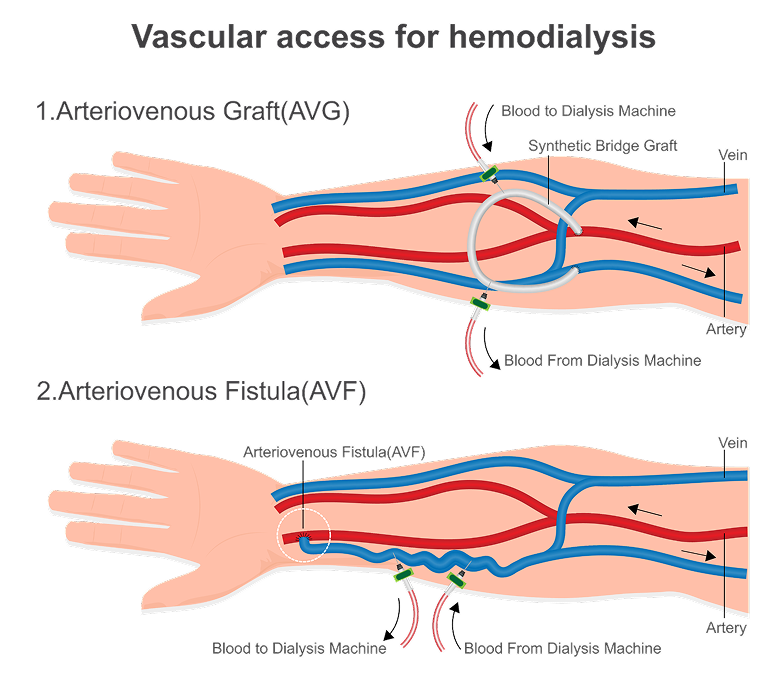
Long-Term Dialysis Access Options
Before the procedure, patients undergo evaluation, which may include:
Physical examination
Vein mapping ultrasound
Imaging to assess artery and vein health
During the procedure, local anesthesia is administered, and a small incision is made to access the blood vessels. A connection between an artery and a vein (AVF) is then created, or a synthetic graft is used (AVG). This connection increases blood flow, allowing the vein to strengthen and expand over time so it can support dialysis treatments.
After placement, the access site typically requires time to mature before it can be used, which may take several weeks depending on the individual.
Choosing the Right Dialysis Access
Our goal is to ensure you have reliable, long-term access while supporting your comfort and overall well-being throughout treatment.