
EndoAVF
Percutaneous Fistula Creation – EndoAVF Procedure for Hemodialysis Access
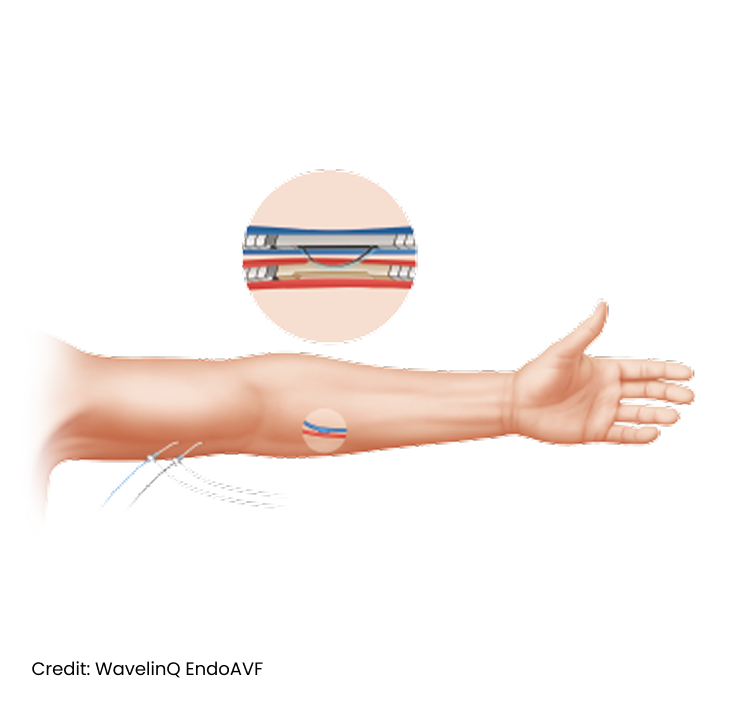
EndoAVF (Endovascular Arteriovenous Fistula) is a minimally invasive procedure used to create dialysis access for patients who require hemodialysis. Unlike traditional surgery, EndoAVF is performed using advanced imaging guidance, allowing physicians to create the connection between an artery and a vein from within the blood vessels.
During the procedure, a small catheter is inserted, typically through a tiny access point in the arm, and guided to the target artery and vein using ultrasound or fluoroscopy. A specialized device is then used to create a connection between the two vessels, allowing blood to flow in a way that supports effective dialysis.
Because this approach avoids open surgery, EndoAVF is designed to provide a more comfortable experience while still creating reliable access for treatment. After the procedure, the access site is monitored to ensure proper blood flow and function over time.
Benefits of Choosing EndoAVF

Minimally invasive approach with no large incisions
Faster recovery time compared to traditional surgery
Lower risk of infection due to reduced tissue disruption
Minimal scarring with small access points
Outpatient procedure in most cases
Improved comfort during recovery
Preservation of vein structure for future access needs
These benefits make EndoAVF an appealing option for many patients, particularly those looking to minimize downtime and discomfort.
Surgical Fistula Creation
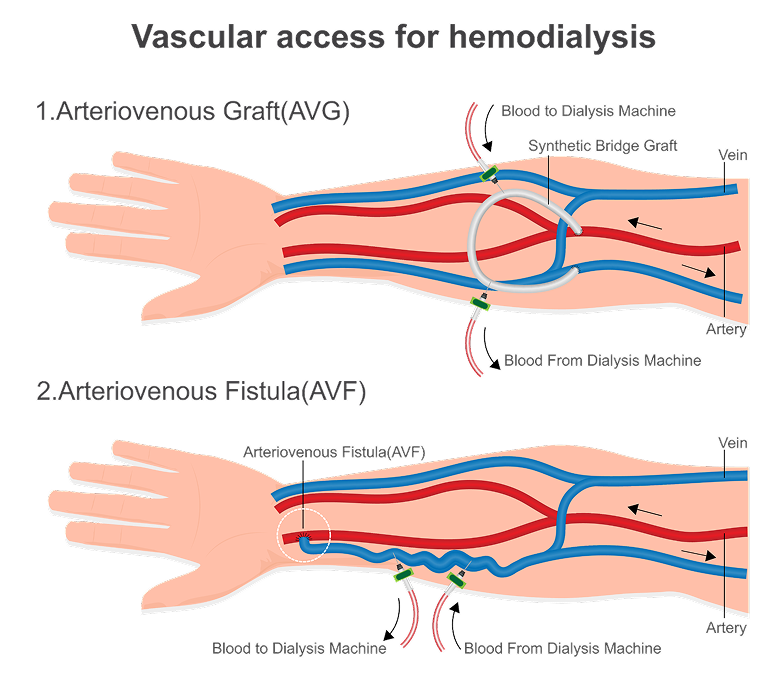
A surgical arteriovenous fistula (AVF) is the traditional method of creating dialysis access. During this procedure, a small incision is made to directly connect an artery and vein.
Surgical fistulas have a long history of use and are known for their durability and reliability over time. For some patients, this approach may be the most appropriate option depending on their anatomy and medical history.
Because it involves open surgery, recovery may take longer, and some scarring may be present. However, surgical access continues to be a trusted and effective solution for many individuals undergoing dialysis.
EndoAVF vs. Surgical Fistula
EndoAVF uses a minimally invasive, catheter-based technique to create the connection internally, while surgical fistulas require a small incision to access the vessels directly.
EndoAVF may offer:
A less invasive experience
Faster return to normal activities
Reduced post-procedure discomfort
Minimal visible scarring
Ideal Candidates for EndoAVF
Require long-term hemodialysis access
Are looking for a minimally invasive alternative to surgery
Prefer a treatment option with a potentially shorter recovery time